The Yearly Expenses Tracker Logbook: A Strategic Foundation for Financial Clarity
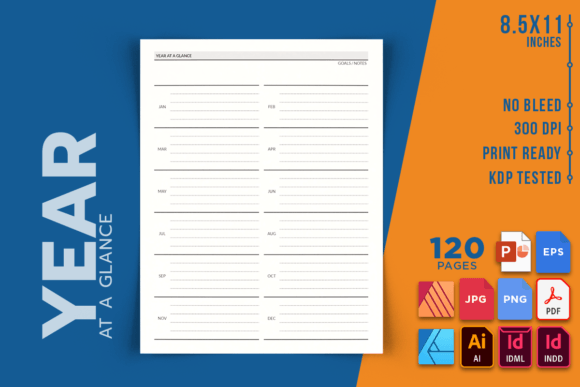
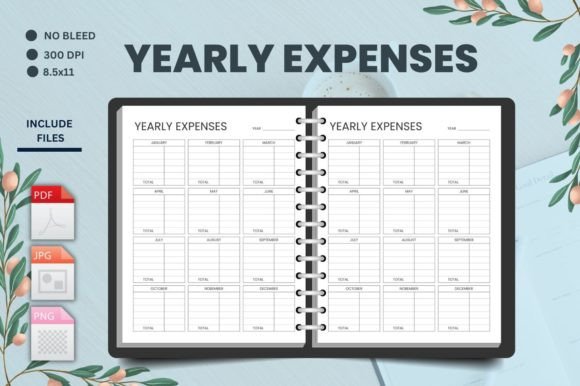
Many financial tools promise transformation but deliver complexity. The Yearly Expenses Tracker Logbook takes a different path. It strips away distractions and gives you a single, structured space to record, review, and rethink how money moves through your life or business. At its core, this is a 120-page interior, 8.5″ × 11″ no-bleed layout designed for KDP upload, but its real value lies in the habit and the insight it creates over twelve months. It’s not a spreadsheet that requires constant tweaking. It’s not an app that bombards you with notifications. It’s a deliberate, analog tool that asks you to slow down and pay attention.
For entrepreneurs, creators, and professionals who already understand that intention shapes outcomes, a dedicated expense log fills a strategic gap. It bridges the distance between vague guesses about spending and a clear, actionable picture of where resources actually go. When you use it thoughtfully, it functions less like a simple list and more like a decision-making lens. You begin to notice patterns that inform pricing, project viability, or even the timing of investments. The physical act of writing also engages a different part of the brain compared to typing, which often leads to deeper reflection and sharper recall.
Why a Physical Logbook Still Matters in a Digital Age
Digital tools promise auto-categorization and real-time dashboards, but they also introduce friction: subscription fees, feature bloat, and the risk of mindless scrolling past categorized transactions without ever truly absorbing them. The Yearly Expenses Tracker Logbook removes that layer of abstraction. Each page represents a deliberate time block — a week, a month, or a specific project — and the format asks you to sit with the numbers. You see totals accumulate in your own handwriting, which makes the connection between daily choices and monthly outcomes feel more real.
There’s also a strategic advantage to keeping a separate, physical record. For freelancers or small business owners who bill irregularly, the logbook becomes a companion to digital banking. You can note cash payments, split transactions by client, or flag deductible expenses in real time. Later, when you sit down with your accountant or prepare quarterly estimates, you’re not reconstructing memory from a cluttered bank feed. You have a clean, sequential record that aligns with how you actually think about your work.
Goal Alignment Through Monthly Review
Most people set financial goals at the start of the year and then lose touch with them by March. A Yearly Expenses Tracker Logbook turns goal-setting into a recurring operational practice. Instead of an annual resolution, you can set monthly targets — for discretionary spending, business operating costs, or debt reduction — and track variance right on the page. Seeing a gap between planned and actual expenses isn’t a reason for guilt; it’s raw data that points to where your assumptions need adjustment.
For example, if your goal is to increase your freelance profit margin by 10% this year, the logbook lets you isolate where overhead creeps in. Are software subscriptions expanding unnoticed? Are client lunches adding up faster than you thought? By assigning each expense to a simple category — and being consistent with those categories — you build a reliable baseline. Over several months, the log becomes a feedback loop that sharpens your financial instincts.
When to Use It Beyond Monthly Budgeting
While a yearly tracker naturally fits a calendar cycle, its highest value often emerges during transitions and projects. Consider these situations where the logbook becomes a strategic asset:
- Launching a new product or service. Every cost from prototyping to marketing can be captured in the log under a dedicated section. Later, you’ll know the true margin without hunting through mixed expenses.
- Preparing for tax season. Categorizing expenses as you go — and noting the business purpose directly on the page — transforms a last-minute scramble into a 30-minute summary session.
- Managing an irregular income. When your income fluctuates, a clear view of base operating expenses helps you determine a realistic minimum viable income and informs when to reinvest or save.
- Home renovation or large purchase planning. Using the log to track every outlay against a quoted estimate keeps contractors accountable and prevents budget overruns.
Each use case relies on the same simple behavior: writing things down at the point of occurrence. Over time, this creates a rhythm where spending decisions are automatically filtered through the awareness that they will be logged. That slight delay between impulse and record can itself prevent unnecessary spending.
How to Approach the Logbook Intentionally
The difference between a useful log and a forgotten notebook lies in how you set it up. Before you write the first entry, decide on a minimal framework that aligns with your larger objectives. If you’re a blogger tracking content production costs, you might need columns for date, description, amount, payment method, and project name. If you’re a household managing shared expenses, you might add a column for who paid and whether it was joint or individual.
A practical approach is to dedicate a few pages at the front of the Yearly Expenses Tracker Logbook to a key. Define your categories in advance — utilities, groceries, marketing, professional development, travel — and stick to them. This doesn’t mean you can’t adapt, but a stable taxonomy lets you compare months meaningfully. Pair this with a simple monthly summary page where you transfer totals and note any anomalies. The act of summarizing forces you to engage with the data rather than simply archive it.
Strategic Observations: Moving from Recording to Decision-Making
The logbook’s real power is not in the recording; it’s in the patterns that emerge when you review it regularly. After two or three months, pull back and ask strategic questions: Which categories are increasing month-over-month without a corresponding increase in income or satisfaction? Are there seasonal spikes you failed to anticipate last year? Where do small, recurring charges — subscriptions, fees, coffee runs — quietly erode the margin you need for bigger investments?
These observations become the basis for strategic shifts. If you notice that 40% of your monthly business expenses go toward tools you rarely use, you can cut them and redirect that money toward high-impact activities like targeted advertising or professional education. If you’re saving for a mortgage down payment, the log shows you exactly which non-essential categories you can temporarily trim without feeling deprived. It’s not about deprivation; it’s about informed reallocation.
Planning and Positioning for Long-Term Results
Creators, publishers, and small business owners often overlook the fact that expense tracking is a branding and positioning exercise in disguise. When you know your true cost structure, you can price your work confidently. You stop undercutting yourself out of fear or charging premiums that don’t hold up against your actual delivery costs. The logbook becomes a reference point for profitability analysis and client negotiations.
Similarly, for educators or stationery shop owners who might sell the Yearly Expenses Tracker Logbook itself, understanding its practical use helps you position it honestly. It’s a 300 dpi, print-ready interior with no bleed, perfect for KDP. But what you’re really offering is a container for better decisions. Marketing that speaks to the outcome — “a year of intentional spending” — resonates more than a features list. Use your own expense log to track the costs and returns of your product line; this creates a virtuous cycle where the tool you sell also sharpens the business that sells it.
Risks of Using a Tracker Without Clear Goals
A common pitfall is what I call “tracking theater” — meticulously logging every expense without ever analyzing what the numbers mean. This often stems from anxiety rather than strategy. You might fill page after page with color-coded perfection and then file the logbook away, never letting it inform a single decision. That’s busywork, not financial management. Another risk is becoming overly rigid: cutting essential but hard-to-quantify expenses like team morale events or personal health because they don’t immediately show a return in the log. The logbook should serve your goals, not dictate them.
To avoid these traps, pair your tracking with a short monthly narrative. On the summary page, write one or two sentences about what the numbers reflect. “Travel expenses were high this month because of a client visit that led to a $5,000 contract.” This simple note turns data into context and prevents you from making cost-cutting decisions that harm longer-term relationships or growth.
Integrating the Logbook With Other Tools
You don’t need to abandon spreadsheets or accounting software. The Yearly Expenses Tracker Logbook works best as a front-line capture tool and a thinking space. Categorize transactions in the log throughout the week, and then once a month, reconcile those figures with your digital accounts. This hybrid approach catches missing entries and also provides a built-in audit. You might find a recurring charge you forgot about, or a bank error that would have slipped past a glance at a screen. The physical record acts as a second layer of verification, which is especially valuable for anyone reconciling multiple payment sources.
Creating a Financial Memory
After a full year, the completed logbook becomes an asset in itself. It’s a financial diary that shows you exactly what you spent, when, and why. For entrepreneurs, it can inform next year’s project budgets with real historical data instead of hopeful guesstimates. For individuals, it provides a sober but empowering look at how life stages — moving, having a child, changing jobs — affect cash flow. This longitudinal view is something no typical app delivers without effort. Apps rarely encourage you to look back; they push forward. The logbook invites reflection.
The 120 pages interior are generous enough to accommodate daily entries if you choose, or a streamlined weekly layout. The 8.5″ × 11″ size gives you room to write without feeling cramped, and the no-bleed design ensures that your writing isn’t cut off if you decide to print your own version or use it as a downloadable printable. This thoughtful structure supports the kind of consistent, low-friction use that builds a genuine financial habit over time.
Practical Tips for Staying Consistent
- Anchor logging to an existing routine. Keep the logbook near your laptop or on your desk and fill it in during the same five-minute block each evening, or every Friday afternoon before you wrap up your week.
- Don’t aim for 100% accuracy on day one. Accept that you’ll miss a few small cash purchases. The goal is overall patterns, not forensic precision.
- Use the logbook as a communication tool. For couples or business partners, a shared logbook creates a neutral, blame-free space to discuss money. Refer to the pages, not personality, when reviewing what worked and what didn’t.
- Celebrate small wins. When you notice a category trending down in a healthy way, acknowledge it. Positive reinforcement keeps the practice sustainable.
When a Simple Expense Tracker Becomes a Growth Lever
Ultimately, the Yearly Expenses Tracker Logbook answers a practical need — tracking money — but its deeper role is to reduce cognitive load. When you stop trying to remember every bill, every receipt, and every due date, you free up mental bandwidth for creative work, strategic thinking, and genuine presence with clients or family. The logbook holds the details so you don’t have to. In that sense, it’s not just an expense tracker; it’s a tool for focus. The high-resolution 300 dpi files (JPG, PNG, PDF) ensure that if you’re a publisher offering this as a KDP interior, your customers get a crisp, professional product that respects their eyes and their effort. And if you’re the end user, you get a clean, spacious layout that doesn’t distract from the task at hand.
Financial clarity rarely comes from a giant leap. It comes from small, repeated acts of observation. The Yearly Expenses Tracker Logbook structures that observation into a format that fits twelve months of real life — messy, unpredictable, and full of trade-offs. Used intentionally, it helps you make decisions from a place of knowledge rather than assumption, and that is one of the quietest but most reliable forms of competitive advantage available to anyone.