Crossword 6: Real-World Uses for a 13×13 Puzzle Template on Amazon KDP
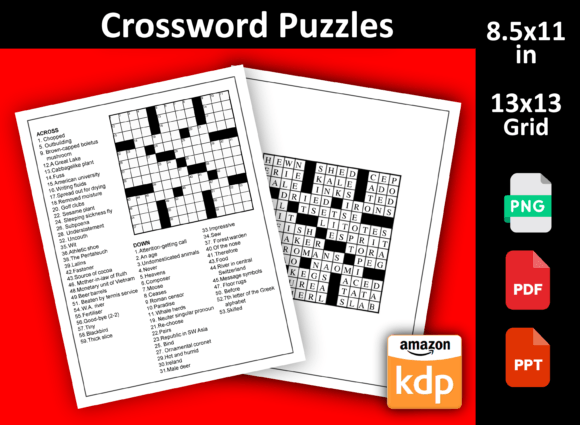
The crossword puzzle market on Amazon doesn't seem to slow down. Scroll through the bestseller lists in the puzzles and games category, and you'll find fresh titles popping up every week — many of them from independent publishers who figured out that crossword books offer something rare: recurring demand with minimal ongoing effort. What keeps those publishers ahead isn't just luck or timing. It's often the quality of the interiors they start with. That's where a resource like Crossword 6 enters the picture — a ready-to-use 13×13 American-style crossword template built specifically for creators who want to publish without redesigning the wheel every time.
Who's Actually Publishing Crossword Books, and Why It Matters
If you assume the only people publishing puzzle books are retirees or full-time KDP sellers, you're missing half the story. The reality is far more varied. Teachers compile themed crossword collections for classroom brain breaks. Activity directors at assisted living facilities create custom books for residents. Coaches and consultants use puzzle books as low-cost lead magnets. Even parents have gotten into it — designing gift books for family reunions or holiday stocking stuffers. Each of these scenarios calls for a slightly different approach, but they all share one need: a clean, properly formatted puzzle interior that doesn't require hours of tweaking.
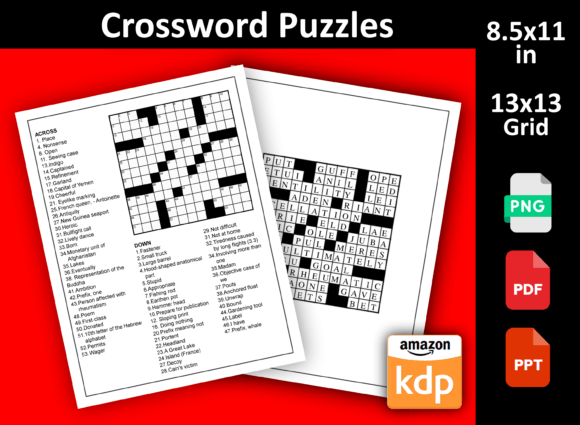
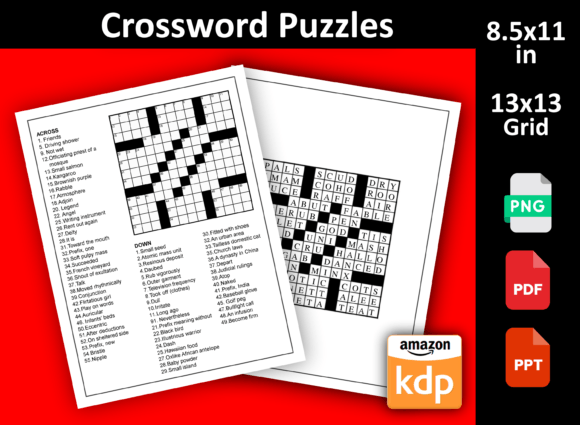
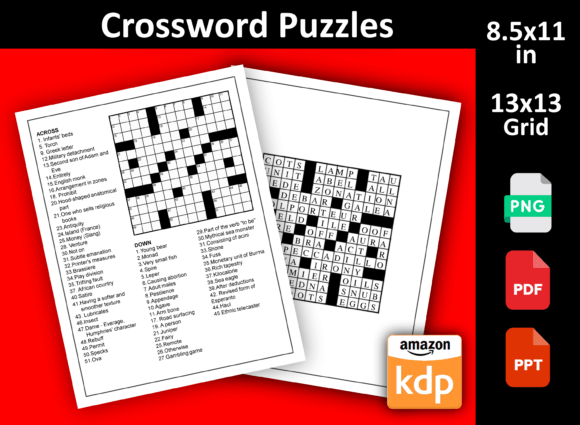
With Crossword 6, the grid is already set at 13×13 — a size that hits a sweet spot for solvers who want something meatier than a quick 9×9 but not as daunting as a full newspaper-style 15×15 or 21×21. The difficulty skews intermediate to hard, which appeals to adults who've outgrown beginner puzzles but don't necessarily want to spend an hour on a single grid. For publishers, that positioning matters because it narrows the audience in a useful way: you're targeting people who actively seek a challenge, not casual dabblers who might leave a frustrated review.
The 13×13 Grid and Why Format Decisions Shape Your Book's Reception
Grid size isn't just a design preference. It influences page layout, font sizing, and ultimately the solver's experience. A 13×13 grid on an 8.5×11 inch page gives clues and boxes enough breathing room without forcing tiny text. For older solvers — a significant chunk of the crossword-buying audience — legibility can make or break a purchase decision. If the numbers are cramped or the clue text runs too close to the grid, you'll hear about it in reviews. The no-bleed setup included with this interior means the puzzle sits cleanly within standard print margins, which is one fewer thing to troubleshoot during the upload process.
American-style crosswords also carry certain expectations. Solvers anticipate symmetrical grids, interconnected words, and clues that lean on wordplay, general knowledge, and cultural references. That style has a loyal following, particularly in the U.S. and Canada, where it's the dominant crossword format. Publishers who understand this can position their books more effectively — targeting keywords like "American crossword book for adults" or "large-print challenging crosswords" rather than competing in the more general "puzzle book" space where the competition is fierce and unfocused.
Mixing and Matching to Build a Unique Catalog
One of the quieter advantages of using a modular puzzle interior is the freedom to combine it with other volumes. Say you've got three different crossword sets — maybe a 13×13 hard collection, a 15×15 themed set, and a cryptic crossword volume. By pulling puzzles from each, you can assemble a variety book that keeps solvers engaged across different styles. Variety puzzle books tend to perform well because they appeal to buyers who don't want to commit to 100 puzzles of the same type. They also rank for broader search terms, which can widen your organic reach on Amazon.
Crossword 6 works well in this mix-and-match approach because its intermediate-to-hard difficulty bridges the gap between overly simple puzzles and intimidating expert-level grids. If you're building a graduated puzzle book — starting easier and ramping up — this set fits naturally in the second half. If you're curating a themed collection around, say, history or science topics, you can pull the harder grids to anchor the later chapters. The flexibility to reposition puzzles within different book structures is something experienced KDP creators lean on heavily.
File Formats and Workflow Realities for Different Types of Creators
Not everyone who publishes on KDP works the same way. Some people live in PowerPoint because it's what they know — they want to drag, drop, and adjust without learning new software. Others need clean PDFs for direct upload or printing proofs at home. And then there are those who want PNG files to pull into Canva, Affinity Publisher, or Adobe InDesign for custom layouts. The zip file behind Crossword 6 includes all three formats, which removes a friction point that can stall a project before it starts.
For the PowerPoint user, the PPTX file means they can tweak fonts, adjust clue placement, or add branding without converting files or losing quality. For the efficiency-focused publisher who just wants to hit upload, the PDF is press-ready at 8.5×11 inches with no bleed. And for the designer who treats each book as a custom project, the PNG gives them a transparent canvas to layer onto themed backgrounds or integrate into larger page designs. Each format serves a different workflow, and having all three means you're not boxing yourself into one publishing style.
Where Crossword 6 Fits in Different Publishing Strategies
The KDP landscape isn't monolithic. A few distinct publishing strategies have emerged around puzzle books, and each one interacts differently with a product like this.
The Volume Play
Some publishers aim for quantity — releasing multiple puzzle books per month across different niches. For them, speed is everything. They need interiors that are formatted correctly out of the gate, with solutions included so there's no extra layout work. Dropping Crossword 6 into a template, adding a cover, and publishing within a day becomes entirely realistic when the interior files are already structured for print.
The Niche Authority Play
Other publishers pick a narrow lane — crossword books for nurses, for history buffs, for cat lovers — and build a brand around it. Here, the puzzles themselves might be themed, but the grid structure remains consistent. Having a reliable 13×13 grid means they can focus creative energy on crafting clever, niche-specific clues rather than rebuilding the puzzle architecture each time. The solution page is already paired with each puzzle, which keeps the book's back half consistent and professional.
The Passive Income Portfolio
A third group treats puzzle books as long-term assets. They publish once, maybe update the cover seasonally, and let the book sit in their catalog generating royalties over months or years. For these publishers, quality matters enormously because returns and negative reviews eat into passive income. A sturdy, well-structured interior like Crossword 6 reduces the likelihood of formatting complaints — one of the more common grievances in puzzle book reviews.
What to Consider Before You Publish
Even with a polished interior, a few considerations can shape how your book performs. First, the difficulty level. Intermediate to hard puzzles attract a specific solver — someone who's comfortable with crosswords and actively wants a challenge. If your book description promises "relaxing easy puzzles" but the grids deliver something tougher, expect mismatch reviews. Be upfront. The 13×13 American crossword format already signals a certain sophistication to experienced buyers, so lean into that rather than trying to appeal to everyone.
Second, think about the clues. The grid structure is universal, but clues can date a book quickly if they reference fleeting pop culture or current events. Timeless clues — historical figures, literature, science, geography, wordplay — give your book a longer shelf life. Some publishers even run themed clue sets across multiple volumes, creating a series that encourages repeat purchases. The puzzle interior stays the same; the creative layer on top is what distinguishes one book from another.
Third, check your print quality. The 8.5×11 inch no-bleed format is forgiving, but different print-on-demand facilities can render grid lines slightly differently. Order a proof copy before going live. Check that the numbering is crisp, the grid cells are evenly printed, and the solution pages are clear. A small investment in proofing can prevent a wave of returns.
Strengths and Honest Limitations
The clear strength of Crossword 6 lies in its turnkey nature. You're not designing a grid from scratch or painstakingly aligning boxes in software that wasn't built for puzzle creation. The American crossword style has broad appeal, and the intermediate-to-hard level filters for an engaged audience. The inclusion of solutions, the clean 13×13 layout, and the multiple file formats make it adaptable to different publishing workflows.
As for limitations, a 13×13 grid isn't for everyone. Absolute beginners may find the difficulty curve too steep — if your target reader is someone who hasn't picked up a crossword in years, you might pair this with easier volumes or clearly label the book as "challenging." Additionally, because this is a single interior product rather than a continuously generated set, you'll want to combine it with other volumes if you're publishing a book with dozens or hundreds of puzzles. Repetition across a large book can become noticeable to attentive solvers, so mixing sources is wise.
How Different Audiences Put It to Use
A retired teacher in Ohio might use Crossword 6 to build a vocabulary-building workbook for adult ESL learners — swapping in clues that reinforce language acquisition while keeping the satisfying grid structure. A stay-at-home dad in Texas could pair it with a themed cover and publish a "Tough Guy Crosswords" book aimed at the Father's Day gift market. An activity coordinator at a senior center might print select puzzles for weekly brain fitness sessions, choosing the 13×13 format because it's substantial but not overwhelming for older adults with varying cognitive abilities.
The common thread across these scenarios is that none of them require the user to become a puzzle designer. They require someone who recognizes a useful resource and applies it in a context that makes sense for their audience. The gap between having an idea for a crossword book and actually holding a printed copy shrinks considerably when the grid, solution, and formatting are already handled.
The Bigger Picture for KDP Puzzle Creators
Crossword books sit in a unique position on Amazon. They're consumable in the best sense — solvers finish them and often look for the next volume. They're giftable. They cross demographic lines. And unlike trend-chasing low-content books that rise and fall with algorithm shifts, puzzles have steady, predictable demand. Tools like Crossword 6 lower the barrier to entry without compromising the quality that keeps buyers coming back. For the publisher who treats their catalog like a business rather than a lottery ticket, that combination — ease of use plus professional output — is worth paying attention to.
Whether you're publishing your first book or your fiftieth, the interior you choose sets the ceiling for how the book is received. A well-constructed 13×13 American crossword with clear solutions and flexible formatting doesn't guarantee success, but it eliminates the kind of structural problems that can quietly undermine it. In a marketplace where your next review is always one puzzle away, that foundation matters more than most people realize.