Mastering Financial Organization with a Bill and Receipt Organizer Log Book
Why Every Household and Small Business Needs a Receipt Tracking System
In a world where digital transactions happen in seconds and paper receipts pile up faster than anyone expects, staying on top of personal or business finances can feel overwhelming. A bill and receipt organizer log book is one of the simplest yet most powerful tools to regain control. It serves as a dedicated place to record expenses, track due dates, and store essential details about every payment you make. Whether you manage a household budget, run a freelance operation, or oversee a growing small business, having a physical log book transforms chaotic piles of paper into a clear, searchable financial record. The act of writing things down also reinforces awareness of spending habits, making you more intentional about where your money goes each month.
Many people assume digital apps alone can handle everything, but a physical organizer offers benefits no software can fully replicate. There is no login requirement, no battery to charge, and no risk of data loss from a crashed hard drive. A well-designed organizer log book lets you flip through pages, spot patterns quickly, and maintain a tangible history of your financial life. This approach aligns with what financial advisors often recommend: build a system that is easy to maintain and difficult to ignore. When the log book sits visibly on your desk or in your home office, it serves as a gentle reminder to stay consistent.
The Core Purpose of a Bill and Receipt Organizer Log Book
The fundamental purpose of this tool is to create a centralized hub for all financial paperwork and payment information. Every entry you log typically includes the date, payee, category, payment method, amount, and confirmation or reference numbers. Over time, this creates a chronological audit trail that proves invaluable during tax season, warranty claims, or reimbursement processes. Instead of rummaging through shoeboxes or scrolling through months of bank statements, you simply open the log book to the relevant period and find exactly what you need.
For business owners, the organizer also plays a critical role in separating personal and professional expenses. The Internal Revenue Service and tax authorities worldwide expect clear, contemporaneous records. A dedicated log book satisfies this requirement elegantly. Even for individuals not running a business, tracking medical bills, insurance premiums, utility payments, and charitable donations becomes effortless. The practical relevance extends far beyond tax time—it helps you truly understand your financial position at any given moment, which leads to better decisions and reduced financial anxiety.
How a Physical Log Book Complements Modern Digital Tools
Technology has given us incredible budgeting software and receipt-scanning apps, but these solutions often fragment your financial picture across multiple platforms. A bill and receipt organizer log book complements digital tools by acting as the master record. You might photograph a receipt with your phone for quick reference, but you log the critical details by hand in the organizer. This dual approach leverages the speed of digital capture with the reliability and mindfulness of manual record-keeping. It also eliminates the frustration of app subscriptions that change pricing structures or discontinue features you relied on.
Another overlooked advantage is accessibility for family members or business partners. A physical log book can be shared instantly without granting app permissions or sharing passwords. If someone needs to check whether a bill was paid while you are unavailable, they can simply open the book. This transparency is especially valuable in households where multiple adults manage finances or in small businesses where a bookkeeper needs clear records to reconcile accounts.
What Makes a High-Quality Organizer Log Book Stand Out
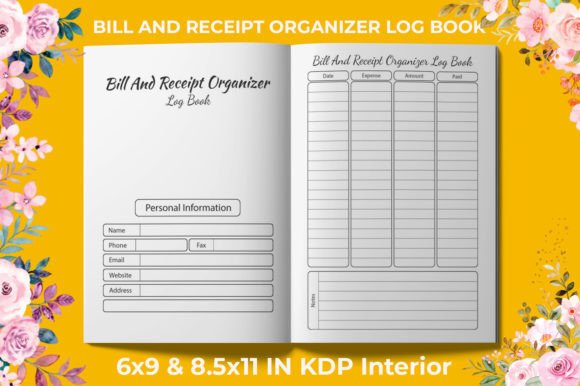
Not all log books are created equal. The design, layout, and physical characteristics of the book directly impact how consistently you will use it. The best organizers feature clean, intuitive templates that eliminate guesswork. Predetermined columns for date, description, amount, payment method, and notes guide you smoothly through each entry. Some versions also include dedicated sections for monthly summaries, tax category checklists, and year-end reconciliation. These thoughtful touches transform a simple notebook into a comprehensive financial management system.
Professional publishers on platforms like Amazon Kindle Direct Publishing (KDP) have raised the bar significantly by offering carefully tested interior files. When you purchase a downloadable version of a bill and receipt organizer, you gain access to print-ready designs that have been through rigorous KDP testing. This ensures the final printed product meets Amazon's quality standards and looks polished and professional. The convenience of downloading a ready-to-upload PDF cannot be overstated—it saves hours of formatting and design work while delivering a result you can trust.
Understanding the Technical Specifications: Why They Matter
Behind every cleanly printed organizer log book lies a set of technical decisions that affect durability, readability, and overall user experience. For those who purchase digital files to print on demand through KDP or for personal use, understanding these specifications helps you make an informed choice. A typical high-quality organizer might come as a 120-page PDF file, offering enough space to track an entire year of expenses with room for supplementary notes and summaries. The page count strikes a balance between comprehensiveness and portability—thick enough to be substantial, thin enough to use comfortably.
300 DPI (dots per inch) is the gold standard for print resolution. At this level, text and lines appear crisp and sharp without any pixelation or blurriness. Whether you print at home or through a professional service, 300 DPI guarantees a premium look that invites regular use. Combined with high-resolution interiors, every page maintains visual clarity from the first entry to the last. No-bleed formatting is another critical feature. It ensures that all content stays well within the printable area, so no text or lines get cut off during the trimming process. This attention to detail reflects a product designed by people who understand both printing and practical usability.
Exploring Flexible Formats: Sizes and File Types for Every Need
Different users have different preferences when it comes to the physical size of their organizer. The two most common dimensions available are 6×9 inches and 8.5×11 inches. The 6×9 format offers portability and a compact footprint that fits easily into a bag, briefcase, or small desk drawer. It feels like a personal journal, making it ideal for individuals managing household bills and personal receipts. The 8.5×11 format, by contrast, provides ample writing space and is better suited for business environments where receipts are larger, descriptions are longer, and multiple people may need to read the entries. Both sizes have their place, and many users keep one of each for different purposes.
Digital delivery typically includes multiple file types to accommodate various needs. A PDF remains the universal standard for printing and viewing across devices. Some bundles include two PDFs—perhaps one for the 6×9 version and one for the 8.5×11 version—giving purchasers maximum flexibility. JPG files may also be included, allowing users to preview pages as images or even use them in digital planning apps on tablets. The ready-to-upload nature of these files means they can be taken directly into a KDP dashboard, uploaded, and published within minutes. For authors, entrepreneurs, and side hustlers exploring the print-on-demand business model, this eliminates technical barriers and accelerates time to market.
The KDP Ecosystem and Print-on-Demand Advantages
Amazon Kindle Direct Publishing has democratized book publishing, allowing anyone to create and sell physical books without holding inventory or managing shipping. When a customer orders a copy of your bill and receipt organizer, Amazon prints it on demand and ships it directly to them. This model reduces risk and upfront investment to nearly zero. For buyers of done-for-you interior files, the path to launching a product on Amazon becomes remarkably straightforward. You simply download the tested files, upload them to your KDP account, design a cover, and publish. The heavy lifting of layout, formatting, and specification compliance has already been done.
KDP-tested files are particularly valuable because they have already passed Amazon's automated and manual checks for print quality. Issues like incorrect margins, image resolution problems, or font embedding errors are common pain points that cause rejections. With pre-tested files, you avoid these headaches entirely. The seller has already gone through the troubleshooting process, ensuring that the interiors look exactly as intended when printed and bound. This peace of mind allows you to focus on marketing and customer satisfaction rather than technical troubleshooting.
Practical Ways to Integrate a Receipt Organizer into Daily Routines
Adopting a new organizational habit works best when it fits seamlessly into existing routines. Place the log book near the spot where you normally sort mail, pay bills, or manage household paperwork. Set aside five minutes every evening or a dedicated half-hour each weekend to update entries. Consistency is more important than perfection. A few hastily written lines in the organizer are infinitely better than a pristine page that remains blank because you were waiting for the perfect moment. Over time, this small investment of effort compounds into a complete, reliable financial history.
Another practical strategy involves pairing the log book with a simple filing system. Use labeled envelopes or folders for physical receipts, noting the log book page number on each one for cross-referencing. If you receive digital receipts by email, print the most important ones or save them in a folder named with the date and log book reference. This hybrid approach marries the tangible reliability of paper records with the convenience of digital backups. Should an audit arise, you will have everything organized and accessible, reducing stress and potential penalties significantly.
Common Misunderstandings About Receipt Organizers and KDP Products
One persistent misunderstanding is that printed log books are obsolete in the digital age. Yet sales data and user testimonials consistently show growing demand for physical organizers, planners, and journals. People crave analog tools as a counterbalance to screen fatigue and constant notifications. A bill and receipt organizer serves a fundamentally different psychological function than an app—it provides a focused, distraction-free environment for a specific task. It also offers a permanent, unalterable record that feels more secure than deletable digital files.
Another common assumption is that buying pre-made KDP interiors requires design expertise. In reality, purchasing a downloadable organizer usually involves receiving files that are fully formatted and ready to go. You do not need advanced software or graphic design skills. The files are typically provided in standard formats compatible with Amazon's upload system. Even the cover design process has been simplified by tools like Amazon Cover Creator. The barrier to entry is remarkably low, making this an accessible entry point for anyone curious about print-on-demand publishing.
Expanding Your Financial Toolkit with Additional Resources
Once you experience the clarity that comes from a dedicated bill and receipt organizer, you may find yourself interested in related tools. Budget planners, expense trackers, mileage logs, and tax preparation workbooks all follow similar principles of intentional record-keeping. Many sellers who create organizer interiors for KDP offer a range of complementary products in their shop. Exploring these options can help you build a complete personal finance system tailored to your specific situation. Each tool reinforces the others, creating a robust framework for long-term financial health.
The beauty of the KDP marketplace is the variety available. You can find organizers with different aesthetic styles, from minimalist black-and-white designs to more decorative layouts with motivational quotes and colorful accents. The choice comes down to personal preference, as the functional core remains consistent. What matters most is that you select a format you will genuinely use. An organizer that sits unused holds no value, while one that suits your taste becomes a trusted companion in your financial journey.
Final Thoughts on Taking Control of Your Financial Records
Financial organization does not require complicated systems or expensive software. At its heart, it requires a commitment to awareness and consistency. A bill and receipt organizer log book provides the structure to make that commitment sustainable. Whether you print a 120-page PDF at home in an 8.5×11 format for business use or carry a compact 6×9 version in your bag for personal expenses, the principle remains the same: what gets recorded gets remembered, and what gets remembered gets managed. In a fast-paced world where financial distractions abound, this simple habit can yield profound peace of mind and measurable savings over time.