Bug Identification Log Book: Your Field Companion for Insect Discovery
Every outdoor walk turns into a tiny expedition when you start noticing the insects around you. A flash of orange wings, the rhythmic chirp of a cricket, or the delicate architecture of a spider web all tell a story. The Bug Identification Log Book transforms that curiosity into a structured, rewarding habit. It is not just a notebook—it is a dedicated space to record, sketch, and reflect on insect encounters, making nature study both organized and deeply personal.
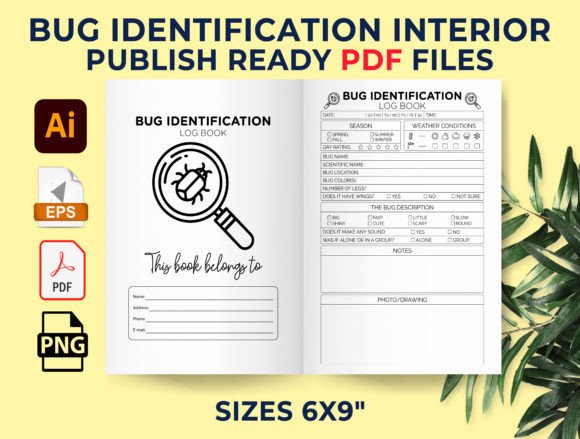
At its core, this log book is a 6-inch by 9-inch, 120-page guided journal designed to simplify bug documentation. The interior features a clean, no-bleed layout with a page-per-day format, simple tracking checklists, and generous room for written observations. Whether you are printing it at home for immediate use or publishing a polished version through KDP, the high-resolution 300 DPI files ensure crisp, professional results. That blend of practical design and production-ready quality appeals to a surprisingly wide range of people, each with their own reasons for filling its pages.
What Makes a Structured Insect Journal Valuable?
Casual note-taking often falls apart because it lacks a system. You might jot a few lines on loose paper, only to lose it weeks later. The Bug Identification Log Book solves that by giving each observation a consistent home. The intro page sets the tone, while the daily pages gently prompt you to note the date, location, weather, insect name, and distinguishing features. Instead of staring at a blank sheet, you move through fields that mimic a naturalist's thought process. This structure helps you build a reliable reference over time, turning scattered memories into a searchable personal archive of local biodiversity.
For someone who simply enjoys afternoon garden strolls, this structure removes the pressure of “doing it right.” You are not expected to be an expert entomologist; the log book meets you where you are. For a homeschool parent, those same fields transform a backyard walk into a science lesson that aligns with observation and data collection skills. Meanwhile, a freelance writer or blogger might use the layout as a backbone for later articles, capturing raw material in a format that is easy to review and turn into engaging content.
Who Benefits from a Dedicated Bug Tracker?
The audience for a tool like this is broader than you might expect. Different people pick up the same log book for entirely different reasons, and understanding those motives can help you decide whether it aligns with your own goals.
Parents, Educators, and Homeschool Families
For adults guiding children through nature study, the Bug Identification Log Book becomes a shared learning tool. Kids love filling in checklists and drawing what they see; the log book channels that excitement while teaching them to record data systematically. A parent might say, “Let’s document every beetle we find this summer.” The simple tracking fields—possibly including prompts like “leg count” or “wing type”—turn a common interest into a month-long project. Because the book is designed with a clear, uncluttered layout, a child can participate without constant adult help, building independence and observation skills at the same time.
Educators in co-ops or nature-based preschools can use the log book as a consumable journal that each student personalizes. The ready-to-print format means you can run off exactly the pages you need, when you need them. The high DPI ensures that even photocopied versions remain legible, so no child struggles with blurry text.
Hobbyist Naturalists and Beginning Entomologists
Adults who have recently discovered a passion for insects often search for a way to organize what they learn. Field guides are great for identification, but they leave little room for personal discovery. The Bug Identification Log Book fills that gap. By noting habitat, behavior, and time of day alongside the insect’s name, you start to see patterns a field guide cannot give you—like the fact that a certain flower always hosts ladybug larvae right after a rain. Over weeks and months, these small data points build into a rich ecological picture of your own backyard or local park.
A beginner might initially worry about making mistakes. This log book relieves that anxiety because it does not require perfect taxonomic accuracy. You can write “small green cricket-like insect” while you figure out the exact species later. The emphasis is on careful observation first, identification second. That approach aligns with the way real naturalists work, and it makes the log book an authentic training tool rather than a test.
Content Creators, Marketers, and Small Business Owners
It is easy to overlook the commercial angle, but people who sell outdoor experiences, nature guides, or educational products can put the Bug Identification Log Book to strategic use. A nature tour guide might offer a printed spiral-bound version as a take-home companion for clients who attend an insect walk. The compact 6x9 size slips easily into a daypack, so participants can keep logging bugs long after the tour ends. The unique design elements—perhaps subtle illustrated headers or themed dividers—give the log book a boutique feel that reflects well on the guide's brand.
Bloggers who write about gardening, permaculture, or family outdoor activities can use the log book as a lead magnet or a digital product. Because the files come in multiple formats including PDF, AI, EPS, and PNG, the creator has full control over customization. You can add a logo, tweak the cover, or insert a branded intro page without rebuilding from scratch. For someone who sells on platforms like Etsy or Gumroad, this lowers the technical barrier and significantly speeds up product launch.
Similarly, a small business selling camping gear or children’s science kits might bundle the log book as a printable bonus. The KDP-tested, no-error file means you can also publish a physical version on Amazon with confidence, sidestepping costly formatting fixes. In each case, the log book transforms from a personal journal into a versatile, low-maintenance revenue stream.
Freelance Designers and Publishers
Graphic designers who serve the education or hobby niche can use the source files as a foundation. Instead of creating a bug journal from zero, they can adapt the existing layout, color palette, or typography to match a client’s needs. The inclusion of AI and EPS formats means vector elements stay fully editable, preserving clean lines when scaling for different trim sizes. The no-bleed design simplifies printing logistics, saving time and reducing the chance of production errors. For a publisher producing a series of outdoor journals, this modular starting point accelerates time-to-market while maintaining a consistent standard of quality.
Key Features That Support Real-World Use
Not every notebook handles the demands of field use well. The Bug Identification Log Book was put together with practical sturdiness in mind. The 6x9-inch dimensions strike a balance—large enough to write in comfortably, small enough to tuck into a cargo pocket or a backpack side sleeve. A full 120 pages gives you enough room for a whole season of bug hunting without becoming too heavy to carry on a long hike.
The page-per-day format encourages regular entries without feeling overwhelming. If you skip a day, there is no wasted space pressure; you simply move to the next fresh spread when you are ready. Simple tracking elements, possibly including checkboxes for common insect orders or easy symbols, let you log at a glance. For instance, you could mark whether you spotted a butterfly, beetle, bee, or ant, then use the notes area to add details. This dual-layer recording—quick tick boxes plus deeper reflection space—accommodates both rushed moments and leisurely afternoons.
The high-quality, 300 DPI resolution matters most when you print the book yourself or send it to a professional printer. Low-resolution PDFs often look fuzzy or pixelated, especially on thinner lines and small text. This log book’s crisp output ensures that every page remains readable and attractive, which in turn encourages consistent use. A poorly printed journal often gets abandoned in a drawer; a crisp, clean one becomes something you are proud to show others.
Practical Ways to Fill the Pages
If you have never kept a nature journal, starting can feel awkward. Here are a few real-world scenarios that show how different users approach the same blank template.
The Weekend Explorer: You visit a nearby woods every Saturday morning. In your log book, you sketch a quick outline of an unfamiliar orange-and-black beetle, note the date, temperature, and plant it was sitting on, then look it up at home. Over a month, you build a mini field guide specific to that trail—a resource no bookstore can offer.
The Parent-Child Duo: Your five-year-old loves finding roly-polies. Together you flip to a fresh page, let her draw the pill bug, and help her count the legs. You write “under log in backyard” in the location field. These small rituals reinforce curiosity and early science habits, and the log book becomes a cherished keepsake of her early discoveries.
The Urban Gardener: You want to track which beneficial insects visit your vegetable beds. Using the log book’s checklist, you note each ladybug, lacewing, and hoverfly sighting, along with the plant they were on. After six weeks, you notice that marigolds attract the most hoverflies. That insight directly shapes next year’s planting plan, turning the log book into a practical gardening tool, not just a diary.
The Science Communicator: You run a small Instagram account about local wildlife. The log book serves as a content planner. Each entry provides a story hook—a photo-worthy bug, an interesting behavior, a weather observation. Because your raw notes are already organized, you can turn them into accurate, engaging posts without scrambling to remember details.
Deciding If This Log Book Matches Your Goals
No single tool fits everyone perfectly. The Bug Identification Log Book is ideal if you value structure without rigid constraints. It works well for people who want to move beyond casual appreciation and start documenting their outdoor experiences in a repeatable way. If you enjoy the slow, thoughtful process of handwriting observations, sketching, and reviewing past entries, you will likely find it a satisfying companion.
If you are an advanced entomologist who needs highly specialized fields—like microscopic measurements, collection codes, or detailed taxonomic keys—you might find the generalist layout too basic, though the space for notes allows you to add whatever your heart desires. The log book’s strength is its adaptability; it provides a gentle framework, not an inflexible scientific form. For serious research, it can still serve as a portable field notebook that you later transcribe into a more formal database, preserving the immediacy of first impressions.
As a printable product, its value depends partly on your comfort with PDF files and possibly light customization. If you want a fully pre-printed, shipped-to-your-door version, you will need to either print it yourself or look for a print-on-demand option created from the provided files. The upside of digital delivery is that you can reprint pages whenever you fill a book, or print only the sections you need for a specific project like a week-long camping trip.
For entrepreneurs and marketers, the decision often comes down to ease of use and production reliability. The fact that this file has been KDP tested means you avoid the frustration of uploading a design only to have it rejected for formatting errors. The high resolution and no-bleed setup are small technical details that make a big difference in professional presentation. Combined with the generous licensing implied by offering multiple file formats, it becomes a practical asset in a product lineup.
Bringing Observation to Life
There is something profoundly grounding about paying attention to the smallest creatures around us. A Bug Identification Log Book does more than record bugs; it reshapes how you see the world. It slows you down, sharpens your senses, and turns aimless wandering into purposeful exploration. Whether you are a parent passing on a love of nature, a creator building an educational resource, or a lifelong learner chasing your next curiosity, a well-designed log book removes the friction between noticing and knowing.
That seamless transition—from spotting an insect to capturing its story on paper—is where real learning happens. Over time, the pages accumulate not just names and dates, but a textured, personal map of the natural world as you have lived it. And that is something worth holding onto.