Remote Learning Planner: KDP-Ready Interiors for Sellers
Creating a low-content book that actually sells on Amazon isn't just about picking a trending niche. It's about delivering an interior that looks intentional, prints cleanly, and makes the end user feel like they're using a professionally designed tool. The Remote Learning Planner file set is built exactly for that—a ready-to-upload package of PDFs and JPGs that have been tested on Kindle Direct Publishing, so you can skip the technical guesswork and focus on publishing. Whether you're a first-time side hustler or a seasoned KDP seller refreshing your catalog, this planner interior gives you a flexible foundation that respects both your time and the platform's quality requirements.
What you're getting isn't a generic template with awkward spacing or fuzzy lines. The files come at 300 DPI with no bleed, so every page renders with the sharpness buyers expect from a polished print product. The set includes a 120-page PDF, another 2-page PDF (often a quick-view or supplementary spread), and JPG versions of the key layouts. That mix makes it easy to pull graphics into software like Canva or Photoshop, repurpose a page for marketing, or simply work with the file format that fits your workflow. And because the interiors are KDP tested, you're not uploading blind—dimensions, margins, and alignment have already been checked against Amazon's print guidelines.
What Gives This Planner Its Visual Personality
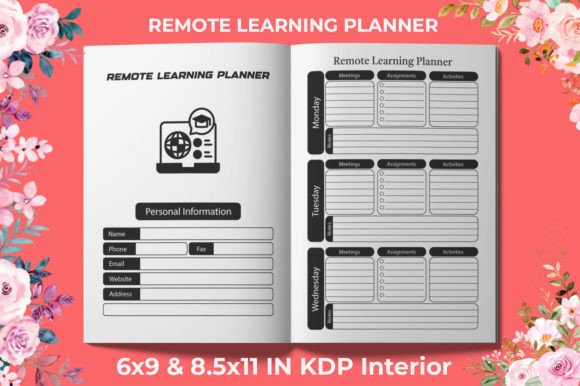
At first glance, the Remote Learning Planner has a clean, structured aesthetic that sits somewhere between academic calm and modern productivity. The pages are designed to be distraction-free but not sterile. You'll notice open table grids, designated header areas for course names or week blocks, and subtle weight variations in the linework that create a gentle visual hierarchy without requiring color. This matters because a planner interior needs to work in black and white—most KDP interiors are printed that way—and the contrast here is balanced enough that even pencil marks scan legibly beside printed prompts.
The decision to offer the planner in two popular trim sizes—6×9 and 8.5×11 inches—adds another layer of design personality. The smaller format feels portable and notebook-like, ideal for a student or parent tracking a handful of subjects. The larger version opens up the page, giving more breathing room for lesson breakdowns, weekly overviews, and longer note sections. Both keep the same core layout language, so you get a consistent brand feel across products if you decide to release both formats in your KDP store. The style leans toward a modern typography approach: clean, sans-serif style headers (the overall look gives that vibe) that reinforce clarity, which is essential when your audience is already managing screen fatigue and scattered schedules.
Where This Interior Works Best Across Creative and Publishing Projects
Obviously, the primary home for these files is Amazon KDP—upload the PDF, set your cover, and list. But the same interior files can stretch beyond a single platform. Many sellers use print-on-demand expansion strategies, adapting planners for Etsy's downloadable product market or selling physical copies through Shopify-integrated fulfillment. Because the JPGs are high-resolution, you can also pull a sample page into a sales graphic or a Facebook ad mockup without losing clarity. The flexibility of having both PDF and image formats saves you from that awkward "can I screenshot this and still make it look professional?" moment—you already have the clean source files.
For educational publishers or content creators offering remote learning resources, this planner interior can morph into a bonus download for a course, a printable workbook companion, or a student organizational toolkit. The no-bleed design ensures that any teacher or parent printing at home on standard letter or A4 paper won't lose content off the edge, which drastically cuts down on customer complaints about trimming. Small business owners in the stationery space might also find the 6×9 layout a solid base for a line of printed academic journals, swapping out the cover design while keeping the interior consistent—building a brand identity around a signature layout style across multiple product SKUs.
How the Planner Layout Shapes Readability and User Engagement
A planner is only as good as someone's willingness to open it daily. The Remote Learning Planner interior influences this through deliberate spacing and a rhythm that reduces cognitive load. Each page section has enough white space to separate tasks visually, but not so much that it feels sparse. The font pairing implied by the design (the typography used within the planner) leans on a clean, no-fuss approach—thin leader lines or dots for entry fields are paired with slightly bolder headers, creating a natural visual hierarchy that guides the eye without shouting. For someone juggling multiple classes, assignment deadlines, and video call schedules, this quiet structuring can actually lower the bar to getting organized, because the planner doesn't demand that the user first figure out how to use it.
From a brand perception angle, the interior communicates reliability and thoughtfulness. There's a tangible difference between a planner that looks like it was thrown together with default table settings and one that uses consistent line weights, thoughtful section margins, and page numbers that fall in the same spot. Even if your buyer can't articulate that difference, they feel it when they flip through. That sense of professionalism builds trust, which becomes a quiet differentiator in a niche where dozens of cover variations lead to near-identical interiors. If you've ever seen reviews that say "the inside is just blank boxes," you know the pain—this planner interior sidesteps that entirely by offering a considered structure that reflects actual remote learning rhythms.
Practical Considerations Before You Publish
Even with high-resolution interiors and KDP-tested files, there are a few design decisions you'll want to make from a smart seller's mindset. Page count is one: the main download is 120 pages, which hits a sweet spot for perceived value without blowing out printing costs (and therefore royalty calculations) on Amazon. If you're listing on KDP, remember that paper type matters. These interiors were tested with Amazon's standard print setup, but you can still tweak your cover file to ensure spine alignment if you're creating a paperback. Because the file is no bleed, you won't need to worry about extending background colors or patterns off the page edge—the interior already respects the trim line, which makes cover setup more straightforward.
Another practical angle: customization. Since you're getting JPG files, you can take the layout into Photoshop or Canva and add your own branding touches—maybe a subtle icons set, a custom introduction page, or a QR code linking to a companion resource. This can help elevate a generic planner into a premium font-adjacent design experience, where the cohesive visual language of the interior matches the personality of your cover. Just be mindful of licensing. Commercial use is baked in for KDP publishing, but if you plan to redistribute the raw source files or use them as a base for a PLR product, double-check the store's terms. For straightforward publishing, though, you're clear to create and sell as many physical planners as you like.
Design Observations That Can Inform Your Branding Choices
When I looked through the layout examples, I noticed small choices that a lot of DIY interiors miss. The line spacing in the table grids stays consistent across page types, which matters when you're printing double-sided and want everything to align perfectly. The column widths in the weekly spreads are proportional to the kinds of information they're meant to hold—subject names get a wider box than the check-in circle for completed status. These details aren't flashy, but they're exactly what separate a random template from an interior that was designed with the actual user workflow in mind. If you're positioning your KDP brand around editorial design or elevated stationery, those subtle design beats will resonate with an audience that's used to seeing well-constructed journals from Paperage or Lemome.
Think about font pairing as part of your cover design strategy. The interior typography is understated, so your cover can pull in a display font with more personality—maybe a friendly handwritten type or a crisp geometric sans-serif—without clashing internally. The same goes for any social media graphics you create for promotion. You can use the JPG page mockup as a background layer and overlay a modern script font for a callout, knowing the planner inside will deliver on the clean promise the graphic makes. This consistency loop from ad to product is a subtle but powerful conversion tool that many KDP sellers overlook; a mismatch between a stylized cover promise and a cluttered interior is a fast route to returns.
Evaluating Fit for Your Shop and Audience
Before you grab this planner file and list it, spend a few minutes thinking about who you're serving. The Remote Learning Planner is obviously aimed at students, parents facilitating at-home study, and educators organizing blended classrooms. But the structure also works for any self-directed learner—someone taking online courses via Coursera or Skillshare, a homeschool pod coordinator, or a tutor tracking multiple student sessions. If your store already carries notebooks or journals in the education space, this interior slots in naturally. If you're pivoting from purely blank notebooks to semi-structured low-content books, this planner gives you a tested entry point without having to design page layouts from scratch.
Consider the two size options as separate audience plays. The 6×9 version speaks to people who want something portable, maybe paired with a backpack or a crammed desk. The 8.5×11 version appeals to those who prefer a full-page worksheet feel, more akin to a traditional lesson planner. You might list both and A/B test your titles or cover designs to see which format gains more traction in your niche. Since the files are ready to upload, you can literally have both formats live on KDP within an hour, giving your brand two shots at the same keyword real estate without extra design labor.
Making the Most of a Tested KDP Interior
The real value of a KDP tested interior isn't just that it passes Amazon's automated checks—it's that you sidestep the frustration of rejected files, resized margins, and unexpected formatting shifts. I've heard from plenty of sellers who spent hours tweaking a Canva export only to have KDP flag it for margins or resolution. This file set eliminates that headache. The high-resolution interiors at 300 DPI guarantee that the printed text and lines look crisp, not pixelated at the edges. The no bleed setup means you're not wrestling with extending patterns to the bleed edge on even-numbered pages across the gutter, which can trip up newcomers on their first paperback listing.
One last practical recommendation: treat this planner interior as a foundational design asset. Even if your first release is a straightforward paperback, you can later expand the product line—add the same interior to a hardcover edition, bundle it with a matching student journal, or create a dated version by tweaking the cover and header text. Because the layout is clean and not overly thematic (no cartoonish clip art baked in), it stays versatile for multiple seasons. A well-built interior has a much longer shelf life than a trendy cover graphic, and the Remote Learning Planner's thoughtful structure gives you exactly that kind of longevity in your KDP business.