Understanding the Editable 2024 Mental Health Planner: A Practical Tool for Personal Wellness
A well-designed mental health planner can turn abstract goals like “feel better” or “manage anxiety” into tangible, daily actions. The Editable 2024 Mental Health Planner is one such resource that has gained attention because it blends a printable format with full Canva editability. It arrives as a high-resolution PDF along with JPG and PNG files, and it includes a Canva link that allows users to customize colors, fonts, and layouts before printing. For anyone deciding between a ready-made journal, a digital app, or this kind of hybrid tool, understanding what it offers and where it fits into a personal routine makes the decision clearer.
What Sets This Planner Apart From a Standard Printable
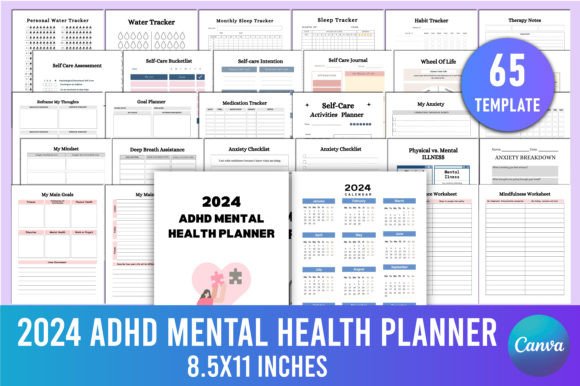
At first glance, the planner might seem similar to the dozens of printable mental health journals available online. However, the difference becomes clear when you look at the level of editability and the breadth of template types. Unlike a static PDF that forces you into predetermined wording or design, the Editable 2024 Mental Health Planner For Canva gives you direct control through a free-to-use platform. That means the Belongs To page, the 2024 calendar, and each tracker can be personalized. You could adjust the “Deep Breath Assistance” page to match your preferred breathing cadence, or tweak the “Wheel of Life” categories to reflect what matters most to you—relationships, career, creativity, or health.
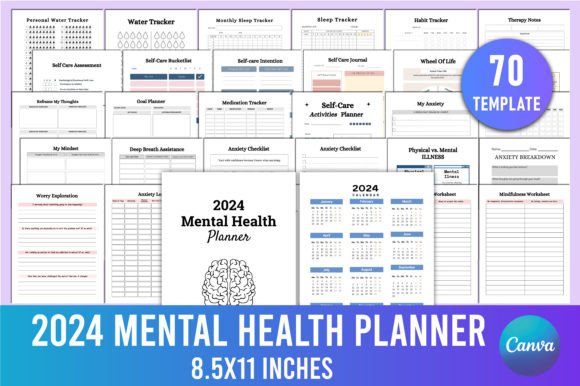
Beyond editability, the package bundles an unusually large number of functional templates. There are over 70 different designs, covering everything from yearly overviews down to daily check-ins. You’ll find a 2024 holidays list, monthly spreads for January through December, weekly and daily planners, and a suite of mental health tools: a mood tracker, an anxiety log, a sleep tracker, a symptom tracker, therapy notes, a medication tracker, and even a reframe-my-thoughts worksheet. This breadth alone sets it apart from simpler options that may only offer a single gratitude page or a basic habit tracker.
How the Editable Format Changes the Experience
One of the key decisions when choosing a planner revolves around flexibility versus convenience. A bound paper planner offers immediate usability but zero personalization. A digital-only app offers custom categories but requires screen time, which can feel counterproductive for someone trying to reduce digital triggers. The Editable 2024 Mental Health Planner occupies a middle ground. You can edit everything on your laptop or desktop using Canva, then print the pages you need, when you need them. This modular approach means you’re not stuck with a full year bound together, and you can adjust as your therapeutic focus shifts.
For example, someone starting cognitive behavioral therapy (CBT) might initially use the “Reframe My Thoughts” and “Symptom Tracker” pages intensively. Later, as they move into maintenance, they could reduce the print load to just the monthly sleep tracker, a self-care bucket list, and a weekly planner. The ability to duplicate, remove, or rearrange pages without starting from scratch is a real advantage over a pre-printed diary or even many subscription apps that lock you into a fixed daily layout.
Comparing the Planner to Other Self-Care Tools
When exploring options, many people weigh this type of printable planner against three common alternatives: a blank bullet journal, a dedicated mental health app, or a pre-made guided journal. Each has its place.
Bullet journals offer unmatched creative freedom, but they demand consistent time and a certain design skill to set up effective mental health trackers. A person in a depressive episode may find blank pages intimidating rather than helpful. The Editable 2024 Mental Health Planner, with its ready-made anxiety checklist, deep breathing guidance, and “My Safety Plan” template, removes that setup barrier while still leaving room for personalization through Canva.
Mental health apps excel at real-time tracking and reminders. They can prompt you to log a mood or practice a mindfulness exercise at set times. However, the act of writing by hand often reinforces reflective processing more deeply. Many therapists encourage paper-based mood logs or worry exploration worksheets because they slow down the thought process. This planner’s “Worry Exploration” and “Anxiety Breakdown” pages support that kind of deliberate handwriting practice. You could combine both by using an app for alerts and the planner for the deeper, end-of-day or weekly reflection.
Pre-made guided journals (like a daily gratitude journal with fixed prompts) are convenient but narrow. This planner’s expansive template set covers physical needs, mental illness education, manifestation, stress level tracking, and even coloring pages for stress relief. That wider scope means you don’t need to buy a separate food diary, a separate period tracker, and a separate goal planner. However, the tradeoff is that you must do the printing and binding, which some may find too time-consuming.
Practical Strengths and When They Matter Most
The planner shines for anyone who likes a structured yet adaptable approach. Its strengths become particularly apparent in specific scenarios:
- Working with a therapist: The “Therapy Notes” and “Anxiety Checklist 2 Unique Page” templates give you a consistent space to note symptoms, prepare questions, and track between-session insights. Having a dedicated “My Mindset” and “Positive Thoughts” section can reinforce cognitive restructuring assignments.
- Managing multiple health tracks: Because the planner includes a personal water tracker, daily food tracker, medication tracker, period tracker, exercise planner, and sleep tracker, it functions like a holistic health dashboard. For people managing both mental and physical conditions—such as anxiety alongside chronic pain or PCOS—consolidating logs into one place reduces overwhelm.
- Building a self-care routine gradually: The “30 Day Self-Care Challenges,” “Self-Care Intention,” and “Self-Care Bucketlist” pages provide a progressive roadmap rather than a vague suggestion to “do more self-care.” The “Wheel of Life” self-care activities planner further helps prioritize where to start.
Another subtle strength is the design continuity. All 70 templates follow a cohesive visual theme and are created in 8.5x11 inches, so assembling a binder or a custom planner looks polished. For someone who values aesthetics as part of their motivation, this consistency can make daily logging feel less like a chore and more like a personal ritual.
Tradeoffs to Consider Honestly
No single resource fits everyone perfectly. The editable aspect is a double-edged sword—it requires access to Canva, basic computer skills, and a printer. If you don’t have a reliable color printer or you find Canva’s interface frustrating, the promise of full customization may become a bottleneck rather than a benefit. In those cases, a straightforward pre-printed spiral journal might be more accessible.
The sheer number of templates can also feel daunting. Some users may experience decision fatigue: “Should I use the daily mood tracker, the stress level tracker, or the anxiety log today?” While the variety is a strength, it demands a degree of self-awareness to avoid over-monitoring. A person prone to perfectionism or health anxiety could slip into checking boxes obsessively. In such instances, it might be wiser to pick just five core pages from the bunch and stick with them, rather than trying to use all 70.
Additionally, the planner is dated specifically for 2024, which means the calendars and holidays won’t transfer seamlessly into the next year without editing. While you can update the editable file, someone wanting an undated perpetual system might find this limiting. However, the Canva link does allow you to swap out the 2024 calendar for a different year’s grid if you’re comfortable with the platform, so it’s not completely rigid.
Who Is Most Likely to Benefit
This planner is an especially good fit for adults who enjoy a tactile, paper-based reflective practice but also want the ability to tweak layouts to match their therapy style or personal terminology. For example, you might rename “Anxiety Log” to “Panic Log” or adjust the “Physical Need” page to include specific sensory grounding activities recommended by your occupational therapist. Creatives who already use Canva for other projects will likely appreciate the seamless editing experience.
Teachers, social workers, and health coaches who need to provide clients or students with customizable self-care resources may also find value in the Editable 2024 Mental Health Planner For Canva. Because it comes with high-quality print-ready PDFs, JPGs, and PNGs, you can share selected pages—like the “Deep Breathing” or “Stress Relief Coloring Page”—as standalone handouts, while still using the full planner for your own professional organization.
When a Different Approach Might Be Better
If your primary need is quick, on-the-go logging, a phone-based mood tracker with notification reminders will likely serve you better than any printable planner. Similarly, if you have minimal desk space or you travel frequently and dislike carrying a binder, a slim pocket journal with simpler daily prompts might be more sustainable. The full potential of this planner unfolds when you have a dedicated time and space to engage with it—perhaps during morning coffee or an evening wind-down routine.
People who feel pressure to be “productive” about their mental health could inadvertently turn the many trackers into a performance metric. If you know you tend to equate filling every blank with success, a more freeform notebook or a guided app with gentle encouragement could be a safer choice. The planner works best when used as a supportive scaffold, not a rigid test.
Making the Most of the Included Templates
If you decide to try this resource, a thoughtful selection process matters more than printing everything. Start with the core rhythm pages: the weekly planner to map obligations, the daily gratitude section to anchor positivity, and one or two mental health specific trackers like the “Anxiety Checklist” or “Symptom Tracker.” Then, as you notice patterns, layer in additional tools. Maybe after two weeks you realize your mood dips correlate with poor sleep—that’s the signal to add the monthly sleep tracker. Or perhaps you notice medication adherence slipping, so you initiate the medication tracker.
The “Manifestation Worksheet,” “Daily Manifestation,” and “A Letter to My Self” pages tend to work well for periodic reflection rather than daily use. Using them on Sundays or at the start of a new month can provide a sense of direction without cluttering everyday entries. Meanwhile, the “Acceptance Worksheet” and “Mindfulness Worksheet” can be integrated into therapy homework, either as a summary after a session or as a structured exercise between appointments.
Realistic Expectations for Long-Term Use
Any planning system requires commitment, and the first two weeks often feel novel and energizing. The risk with a highly detailed toolkit is that the initial enthusiasm gives way to burnout if you try to maintain a perfect streak across twenty different logs. To make the Editable 2024 Mental Health Planner work long-term, treat it like a modular kit rather than a rigid program. Some months you may lean heavily on the “Physical vs. Mental Illness” and “My Safety Plan” pages because you’re navigating a difficult period. Other months, you might only use the monthly planner and the self-care coloring pages. That variation is not a failure; it’s the very flexibility that an editable, printable set allows.
Because you control the print and binding, you can also intersperse blank pages for free journaling. The “Journal Entry” template provides a structured start, but leaving room for unfiltered writing ensures the planner serves you, not the other way around. The “Daily Gratitude” and “Stress Level Tracker” are most effective when kept simple and quick, so they integrate into the day rather than becoming another task on the to-do list.
Ultimately, the value of any mental health planner lies in how well it helps you observe patterns, practice skills, and cultivate self-compassion. The extensive template library, combined with full Canva editability, gives this particular planner a distinctive advantage for those who need a robust, customizable paper-based system. Yet it’s not a universal solution. Weigh the time you have for printing and editing against your need for immediacy, and consider your own history with tracking tools. If you thrive on handwritten reflection, enjoy designing a personal system, and want a broad toolkit that can expand or contract with your needs, this resource offers a solid, well-structured foundation.