Floral Notebook Covers: 5 Beautiful KDP Cover Designs
Imagine opening your KDP dashboard and knowing your next notebook, planner, or journal already has a polished, inviting cover waiting for you. That’s exactly the kind of head start a set of well-designed floral notebook covers can give you. Instead of wrestling with complex graphic software or spending hours browsing stock art, you can pick a cover that already fits the 8.5 × 11 inch format, focus on assembling your lined pages, and publish faster.
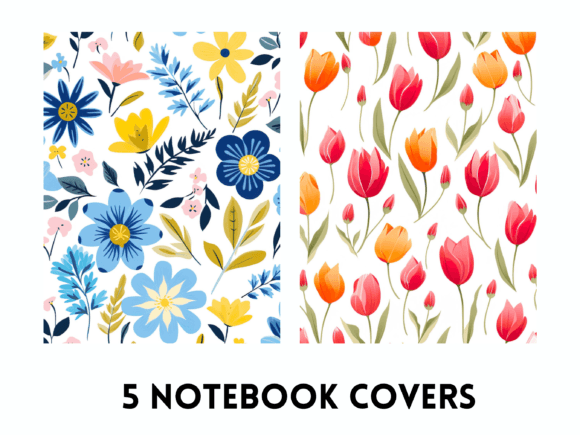
This specific bundle includes five original floral compositions, each delivered as a high-quality PNG file. The dimensions match the most popular large-format books sold on Amazon KDP, so you do not have to worry about resizing or awkward cropping. Whether you are creating a planner journal, a classic composition notebook, or a custom diary, these covers take the heavy design lifting off your plate and let you concentrate on the interior content that actually makes your book unique.
What Makes a Good Floral Cover Work for KDP
Not every pretty flower image turns into an effective book cover. A floral notebook cover for self-publishing needs to balance visual appeal with readability and marketplace expectations. The five designs in this pack handle that balance naturally. The flowers are arranged with enough negative space for a title, subtitle, and author name to sit comfortably without competing with the background. The color palettes lean toward soft, airy tones that look appealing on screens and in print, yet they have enough contrast to catch a shopper’s eye while scrolling through search results.
Many beginners underestimate how much small details matter. A cover that looks gorgeous as a standalone wallpaper might not work when a white or gold lettering is layered over it. Because these PNG files are already composed with text placement in mind, you can quickly test different font pairings in KDP’s Cover Creator or your preferred editing tool without reworking the whole layout. That thoughtful structure turns a pretty image into a functional design asset.
Where Planner Journals and Composition Notebooks Overlap
The same floral cover can serve wildly different audiences. One person might use it on a gratitude journal filled with lined pages, while another creator might pair it with a dot-grid interior for a bullet journal. A teacher could take that exact cover design and turn it into a composition notebook for note-taking, adding a simple title like “Lesson Plans” on the front. The versatility comes from the clean, timeless floral motifs that do not scream one specific genre.
By having five variations, you give yourself room to build a small product line without starting from zero each time. You could, for example, create a planner journal, a weekly reflection book, a lined notebook for creative writing, a floral gratitude log, and a blank sketchbook — all using different covers from the same set but keeping a cohesive visual brand. Consistency like that helps return customers recognize your style, and it also makes your Amazon author page look professional and curated.
Saving Time Without Sacrificing Quality
Designing a full-wrap KDP cover from scratch, even a simple one, easily eats up an afternoon. You have to source the right floral images, ensure they are licensed for commercial use, check resolution, adjust for bleed, and then layer in placeholder text to see if it works. Multiply that by five different books, and suddenly you are spending more time on the cover than on the interior, which is the part readers actually use.
Using pre-made floral notebook covers shifts your energy back to what matters. You still control the final look — nobody stops you from adjusting the hue slightly or adding a subtle frame — but you begin at 80% completion. For the busy freelance illustrator, the educator launching a passive income stream, or the hobbyist testing a niche, that head start is invaluable. It lowers the barrier between having an idea and seeing a live listing.
Understanding the 8.5 × 11 Inch Advantage
When you browse KDP cover options, you will notice that many generic templates prioritize smaller sizes like 6 × 9 inches. Yet the 8.5 × 11 format remains one of the most recognizable and user-friendly dimensions, especially for planners, workbooks, and composition-style notebooks. This larger canvas gives your lined interior pages more room for writing, which appeals to people who hate cramped journaling spaces.
Because the PNG files are already set to these dimensions, you avoid the common frustration of stretching a 6 × 9 design and watching it become blurry or pixelated. Maintaining crispness at the final print size matters enormously for customer satisfaction — no buyer wants to receive a notebook with a fuzzy, smeared cover. High-resolution output also tells Amazon’s print quality checks that your file meets production standards, reducing the chance of unexpected rejection emails.
How to Pair the Cover with Lined Pages Effectively
Once you have chosen your favorite floral cover, the next step is matching it with the right interior. Most creators lean toward a clean lined page layout, which feels natural for note-taking, journaling, or daily planning. A minimalistic line spacing, subtle header or date area, and maybe a small floral accent on each page can create a seamless experience from cover to interior.
You do not need to over-design the inside. In fact, buyers often prefer a simple, distraction-free writing space. A delicate floral detail tucked into a corner can echo the cover without overpowering the page. Since these KDP covers already carry the visual weight, keeping the inside understated lets the book feel balanced. If you are new to interior formatting, start with a straightforward lined template and test-print a few pages at home. Seeing the physical product helps you notice things like margin width and line darkness that affect usability.
What Beginners Should Check Before Uploading
Even with a ready-to-use PNG cover, a few technical checks make the publishing process smoother. First, confirm that your chosen PNG file includes the necessary bleed areas for KDP’s paperback guidelines. Some cover sets provide the full wrap with spine and back cover marked, while others offer the front cover only, expecting you to extend the background yourself. If you are unsure, open the PNG in a simple image editor, look at the file dimensions, and compare them to KDP’s cover template calculator for an 8.5 × 11 trim size with your total page count.
Second, pay attention to color profile. Amazon’s print service prefers CMYK, but many digital files start in RGB. A quick conversion before uploading helps prevent unexpected color shifts from screen to print. Third, always request a physical proof copy. Holding the actual product lets you see how the floral details render in ink, whether the title placement needs a nudge, and how the cover feels in hand. These small steps separate a rushed listing from one that earns positive reviews.
Expanding Your Floral KDP Product Line Thoughtfully
Once you see how quickly a single cover turns into a live book, you might feel tempted to mass-produce dozens of similar notebooks. A smarter approach is to let each cover guide the interior concept. The marigold-style floral might inspire a warm-toned gratitude journal, while a lavender motif could suit a sleep diary or daily meditation log. Letting the cover inform the theme creates a cohesive product that makes sense to the buyer, rather than a random pairing that feels disconnected.
You can also experiment with different notebook types — a composition notebook with a back-to-school feel, a blank sketchbook for artists who like prettier covers, or a recipe journal with sections and category pages. The same five floral designs can launch multiple low-content formats without repeating the exact same book. That variety helps you learn which niches respond best while keeping your creative process efficient.
Why Floral Notebook Covers Continue to Attract Buyers
Floral motifs carry an enduring, gentle appeal that transcends trends. They feel familiar, approachable, and often linked to positive emotions like growth, calm, and self-care. When someone searches for a new journal or planner, a well-executed floral cover catches attention without shouting. It suggests the book inside might be thoughtful and nourishing, which aligns perfectly with the reasons people journal in the first place.
From a seller’s perspective, that consistent demand offers a stable foundation. While heavily seasonal or novelty covers can spike and fade, floral designs maintain interest year-round. A spring blooms cover sells in autumn just as easily, because people buy journals whenever their current one runs out. Knowing that you are building on a reliable visual category reduces some of the guesswork for beginners who are still discovering their publishing rhythm.
Keeping Your Creative Energy High
Burnout often creeps in when creators spend too much energy on tasks that do not directly move a project forward. Using pre-made floral notebook covers frees you to invest your time where it makes the biggest difference: writing compelling book descriptions, researching what your target readers actually want, and refining your lined page interiors for a better user experience. When the visual side is already handled, you stay in a healthier creative flow, which leads to better books and more enjoyment along the way.
This does not mean you are locked out of customization. You can still tweak the cover’s saturation, add your unique title treatment, or even combine elements from two different covers if your software allows it. The starting point is simply higher, and that advantage compounds across every new notebook or planner you publish. Design delays and technical confusion no longer stand in the way of a finished product.
Whether you are building a brand around guided journals, launching a series of student composition notebooks, or simply want one beautiful floral planner for your own daily routine, having five high-resolution, perfectly sized PNG covers at your disposal changes how easily an idea becomes a real, physical book. The technical details — 8.5 × 11 inches, commercial-quality files, and thoughtful floral arrangements — are already in place. You bring the vision, the lined pages, and the willingness to start.